NASA finds military base 100ft beneath Greenland's ice shelf hiding dark secret Updated: 09:28, Wed, Oct 15, 2025
A NASA scientist uncovered more than he bargained for while searching deep beneath Greenland's ice sheet. Chad Greene was attempting to find the bed of the ice when he uncovered a US Army base with a dark secret. Chad’s radar images uncovered Camp Century, a 65-year-old Cold War base buried 100 feet below the ice. The base, known as “the city under ice” was built between June 1959 and October 1960. It consists of 21 underground tunnels and spans around 9,800ft. Chad says the base’s individual structures were clear on radar images taken from the Gulfstream III jet used by his team.
“We were looking for the bed of the ice and out pops Camp Century,” said Alex Gardner, a cryospheric scientist at NASA’s Jet Propulsion Laboratory (JPL), who helped lead the project. “We didn’t know what it was at first.” NASA scientists used an Uninhabited Aerial Vehicle Synthetic Aperture Radar (UAVSAR) to uncover the base. It is similar to a type of radar often used to search for hidden structures and ruins around the globe, reports Popular Mechanic.
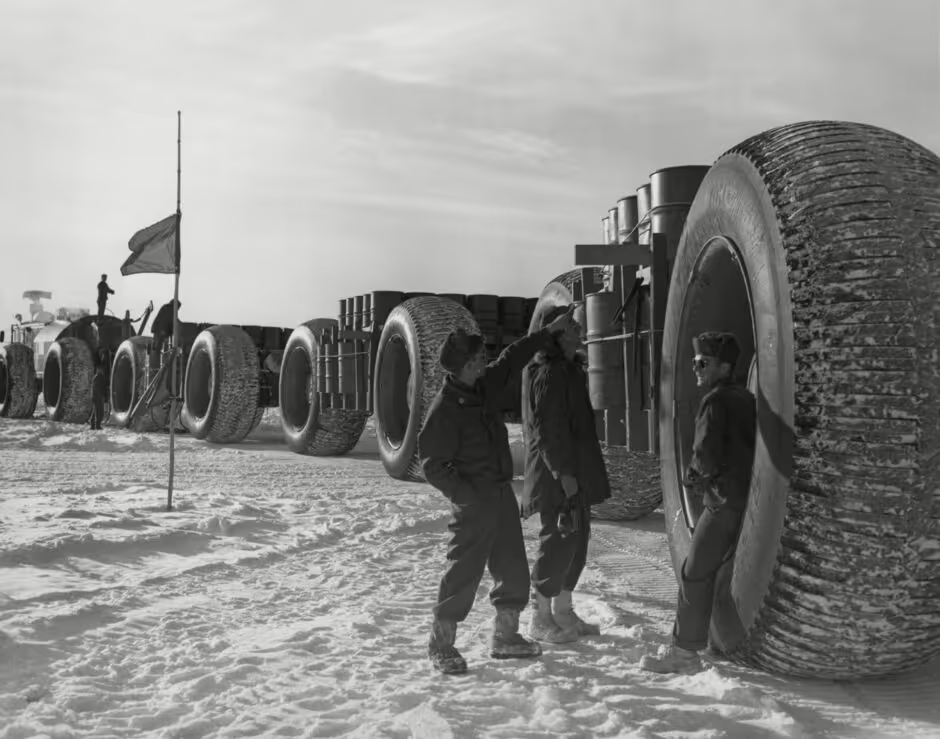
Camp Century was built after the United States and Denmark signed the Defense of Greenland agreement in 1951. It was designed “to negotiate arrangements under which armed forces of the parties to the North Atlantic Treaty Organization may make use of facilities in Greenland in defense of Greenland and the rest of the North Atlantic Treaty area,” says the National Museum of Nuclear Science and History. The camp was made from 6,000 tons of material that had to be transported via heavy bobsleds that reached speeds of 2mph. They were shipped to an army base in Thule before making a 70-hour trip on sled.
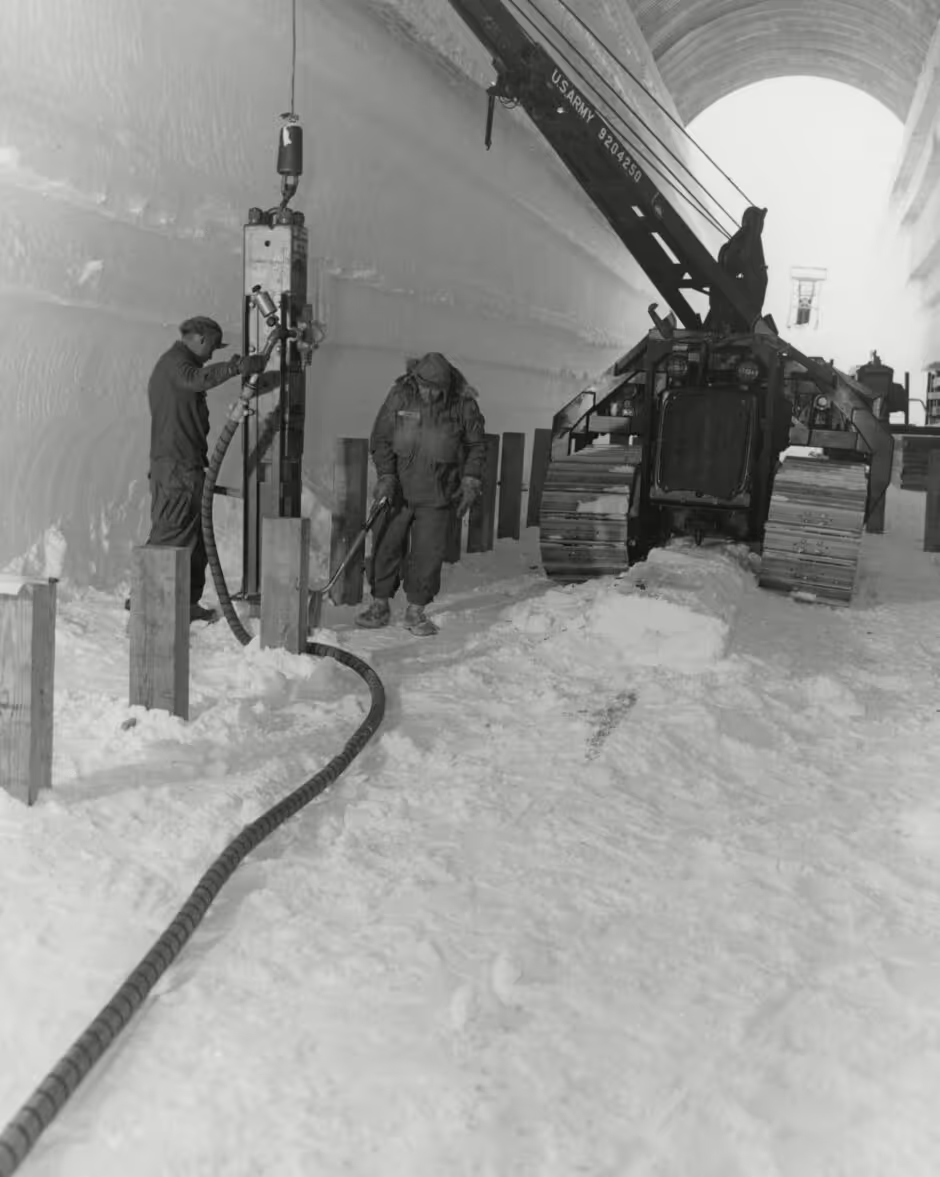
Engineers initially dug 1,000ft passageways, which became known as Main Street, deep in the snow and ice before the wooden buildings and steel roofs were built. Then came the PM-2 medium-power nuclear reactor that powered the site.