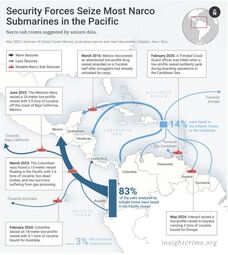
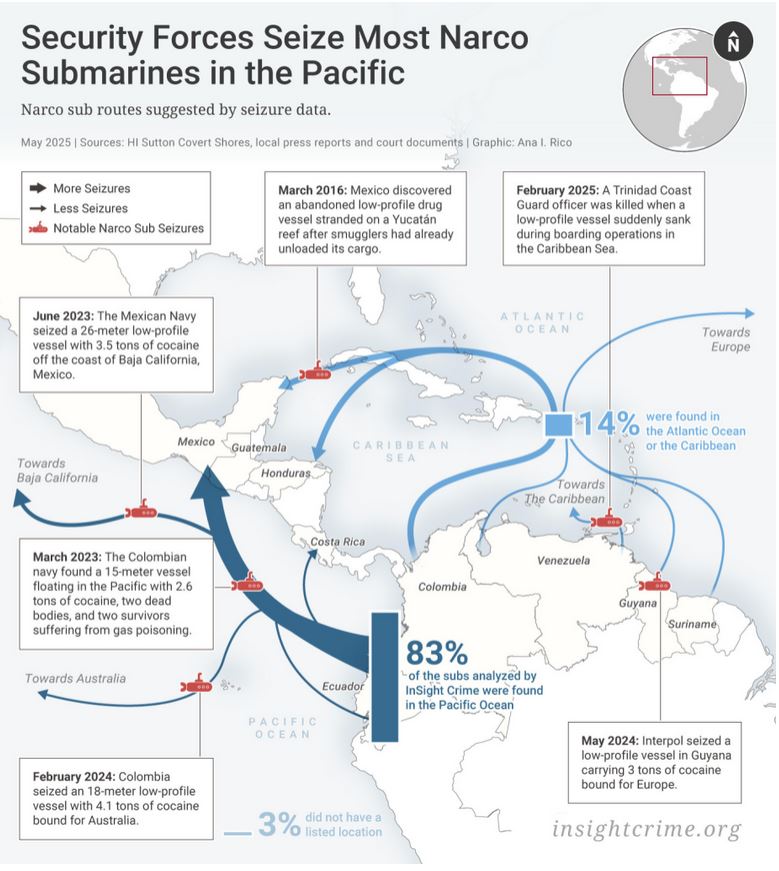
Interception Numbers Rise' Authorities seized a near-record number of narco subs in 2024, making 25 successful interdictions, according to data analyzed by InSight Crime. Most of these subs were seized while plying Pacific drug routes between South and Central America. Of the vessels in our database, 81% were discovered in Pacific waters or along the coastline. Colombian authorities try to intercept these vessels in rivers and estuaries before they reach open water, where detection becomes much harder. Despite these efforts, only one in four narco sub seizures occurs on land or in rivers, according to the analyzed data. Once the subs are in open water, interception becomes extremely challenging, with interdiction rates as low as 5%, depending on conditions, according to US security officials. “LPVs, due to their design and intent to evade detection, generally follow routes that exploit gaps in traditional surveillance coverage,” a spokesperson from the Joint Interagency Task Force South (JIATF), which monitors drug trafficking routes in the air and maritime domains, told InSight Crime. The vessels are sometimes aided by a network of fishing boats and smaller vessels, which serve as refueling stations at strategic points along the routes, according to CIMCON. Although some narco subs can carry up to 1,350 gallons (5,000 liters) of fuel, they may require refueling sooner based on sea conditions or detours to avoid authorities. In 2014, US Southern Command leader General John Kelly testified to Congress that, between limited resources and the large number of vessels encountered, only 26% of all the suspected maritime drug trafficking crafts spotted by US authorities were pursued. “I simply sit and watch it go by,” the commander told Congress. Like all seizures, the data collected only reflects narco sub incidents known to law enforcement, and any estimates of an actual interdiction rate or the number of subs active in the region are stabs in the dark. The tendency of traffickers to scuttle their subs even after successful journeys complicates the efforts of law enforcement to understand exactly where drugs come ashore. But the location of interdictions, cases of beached vessels, and court testimony offer clues. On the Pacific side, the lengthy and relatively unpoliced coasts of Guatemala and southern Mexico have long been prized by drug trafficking organizations as a hub for maritime and air drug shipments, according to testimony from law enforcement officials. cont...