Glantz and the Soviet art of war again. He goes in chronological order to review what the Soviet thought and wrote about the war. During the Cold War they obviously gave a lot of thought about nuclear war. First they maintained their views on warfare how they experienced it in their Great Patriotic War (great ground force maneuvers). Then from the '60s effected by nuclear weapons they dropped all this and claimed that the next war will be nuclear and these weapons will decide everything. But as they observed the events around and how the world lived in the shadow of MAD, they believed there is a decisive place for conventional weapons still, and in the '80s they formulated the thought of war in a "nuclear-scared" environment where everyone abstain from the use of nukes out of fear. Still they cautiously stated if such war is fought and NATO gets beaten they might resort to their use. They realized couple of things. The key to victory is offensive just as ever. To achieve success they need to achieve surprise first. Utmost surprise. They preferred armoured units for their protection against radiation. The units have to be dispersed, no concentrated attacks for just one nuke and the whole group can be taken out. No echelon buildup. The use of second echelon/reserves is circumstantial. First echelon has to be beefed to deliver a good punch. Lightning fast attacks along the whole front, but no springboards right on the front but from further back. Deep penetration of enemy lines fast, often hundreds of kilometers. Have to disable nuclear capabilities. Air assaults (conventional and nuclear if need be), combined with airmobile unit drops. The gaps between the dispersed attacking ground units can be held by fire (conventional and nuclear if need be).
It does remind me of the initial phase of the war on Ukraine.
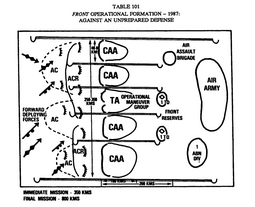
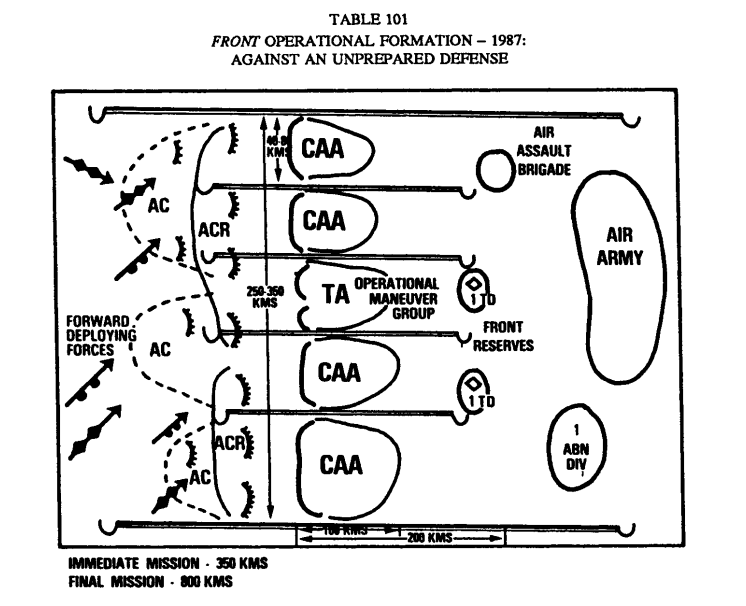
picrel is front operations against unprepared defense
 01/14/2026 (Wed) 20:47
No.55016
del
01/14/2026 (Wed) 20:47
No.55016
del